UPLAND ORGANIC ESTATE
  • Home
  • About the farm
    • Organic-green farming
    • Setting and history
    • Olives, fruits and nuts
    • Walks and picnics
    • Press Room
  • Cellar & tours
    • Wines
    • Brandies
    • Grappa and liqueurs
    • Oude klaskamer tastings
    • Press room
  • US STORE
  • Buy wine online
  • Hands Africa
  • Contact
  • Home
  • About the farm
    • Organic-green farming
    • Setting and history
    • Olives, fruits and nuts
    • Walks and picnics
    • Press Room
  • Cellar & tours
    • Wines
    • Brandies
    • Grappa and liqueurs
    • Oude klaskamer tastings
    • Press room
  • US STORE
  • Buy wine online
  • Hands Africa
  • Contact

Organic-green farming

Upland's unique heritage and farming practices

What makes Upland so unique is the dedication of its owners. For the past 30 years, Dr Edmund Oettlé and his wife, Elsie, have implemented organic farming techniques. Organic farming needs to be economically viable and ecologically sustainable in the long term and therefore making use of natural fertilizers and pest control is not a quick-fix solution, but rather a slow, sustainable process.

The Upland motto plays on the words 'our products don't cost the earth' and the Oettlés believe whole-heartedly in the need to be good stewards of the resources which Upland has been blessed with. The farming techniques they employ have resulted in a vast improvement and richness in the soil, which is reflected in the robustness of their wines.

​Upland's organic grapes have small, loose berries, a high skin-to-juice ratio, and thus greater extraction and flavour than conventional grapes, which might look better and give bigger yields, but have less nutrients.
Picture
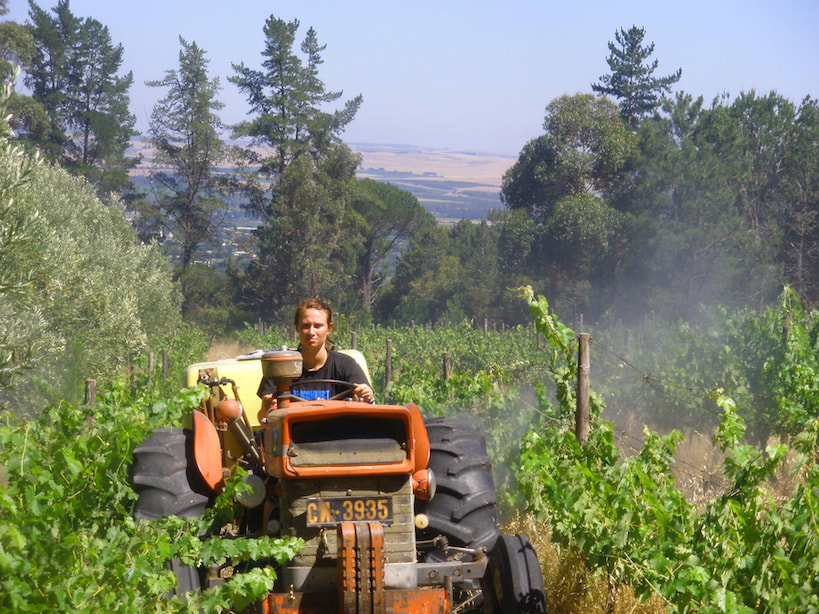
Melissa on the tractor

What is organic/green farming?

Organic farming simply means that no artificial/harmful fertilizers, fungicides or poisons are used in the production of our products. Our techniques go far beyond the necessary requirements to include sustainable and environmentally friendly practices:
  • Sections of fynbos and forest are left specifically to create a safe home for animals, birds, reptiles, and even insects.
  • Most of the invasive aliens have been removed.
  • We adjust our farming activities to minimize interference with the habits of the indigenous fauna; for instance, no mowing or cutting during the breeding season.
  • Almost everything from picking and pruning to packaging is done by hand; this minimizes injury to animals, birds and chameleons as well as creating valuable work for people.
  • As far as possible we use recycled materials, packaging and glass.

Fauna & Flora

Some of the mammals that roam on the farm and nearby Hawequas mountains include Vaal Ribbok, Grysbok, African wild cat, Cape Otter, Cape Hare, porcupine, genet, water mongoose, a large population of shrews and field mice and the extremely rare Striped Weasel. Less welcome visitors are lynx and baboons.

112 species of birds have been positively identified on Upland, including the rare Buff Spotted Flufftail, Peregrine and Honey Buzzard.

The river has its own secrets; it teems with small fish, amongst them the Berg River Redfin which was considered extinct a few years ago and is now on the highly endangered list.
QUICK LINKS
Home
About the farm
   Organic green farming | Setting and history | Olives, fruits and nuts | Walks and picnics | Crafts 
| Press room
​
Cellar and tours
   Wines ​| Brandies | ​Grappa and liqueurs | Oude klaskamer tastings |
Press room
Buy wine:  US Store | 
​South Africa online
Contact
CONTACT UPLAND ORGANIC ESTATE
Mobile/WhatsApp: 082 731 4774


(C) All images Upland Organic Estate